Feelings treasure hunt
3–4 yearsEmotional WellbeingMaterials: Paper
Crayons or markers
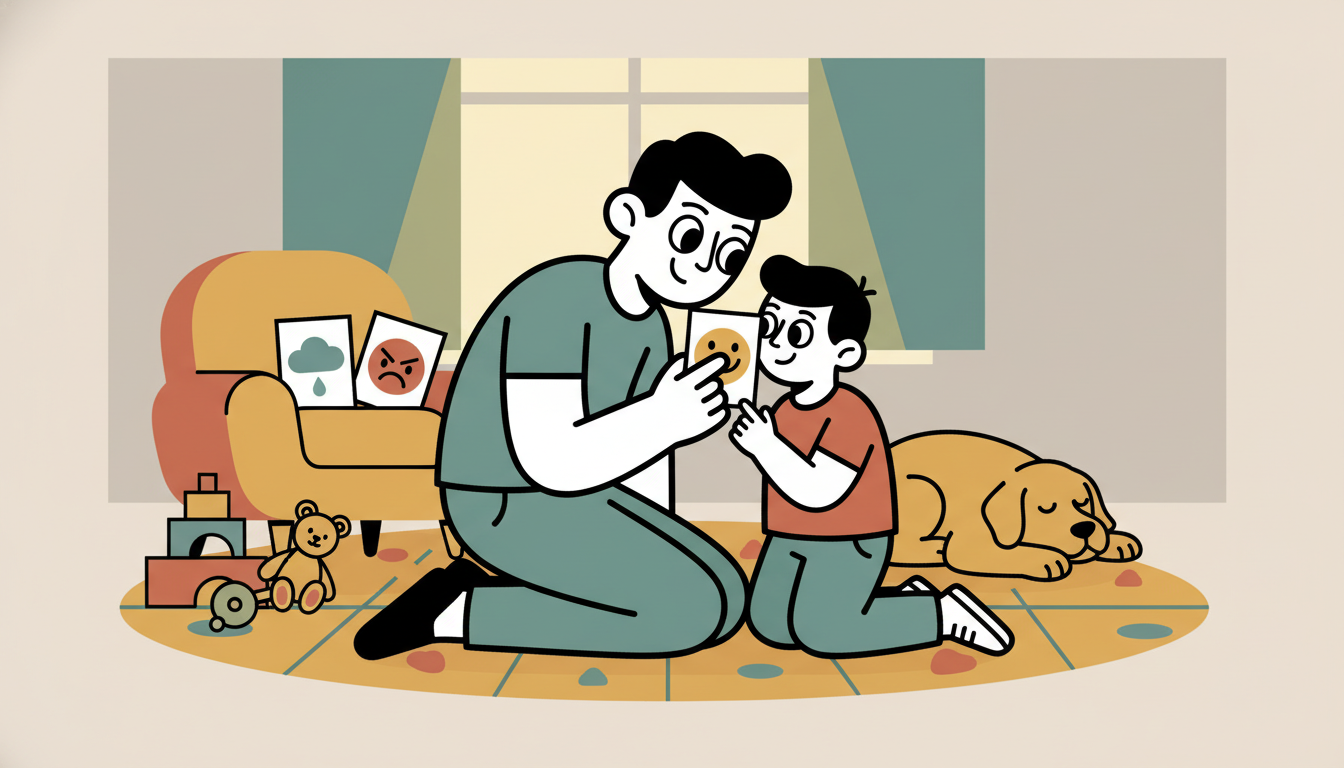
Hide simple feeling cards or drawings around your play area. Go on a treasure hunt together to find them. When your child finds one, talk about that emotion. Ask when they last felt that way or what makes them feel like that. You share your experiences too. This makes emotion exploration active and engaging.
Part of the Steadily developmental journey — personalized to your child.
How to Do This Activity
Hide simple feeling cards or drawings around your play area. Go on a treasure hunt together to find them. When your child finds one, talk about that emotion. Ask when they last felt that way or what makes them feel like that. You share your experiences too. This makes emotion exploration active and engaging.
Why It Works
Building rich emotional vocabulary supports emotion regulation abilities. Students with higher emotional intelligence showed significantly better academic performance and psychological well-being, with enhanced social interactions (Brackett et al., 2011). Active exploration during this sensitive period strengthens emotional awareness and expression skills.
Tips for Parents
Start with four or five basic emotions to keep it simple.
Let your child help draw the feeling faces beforehand.
Take turns sharing experiences for each emotion found.
Materials Needed
Paper
Crayons or markers
Learning Methods
Narrative and Literacy-Rich ExperiencesCollaborative and Cooperative PlayInquiry-Based Learning

Loved this activity? Let us do the planning for you.
Steadily personalizes every activity to your child — their interests, their stage, the traits they're building — so playtime is more fun and every moment counts.
Learn how Steadily works →