Mirror emotion faces
4–5 yearsFamily ConnectionNo materials needed
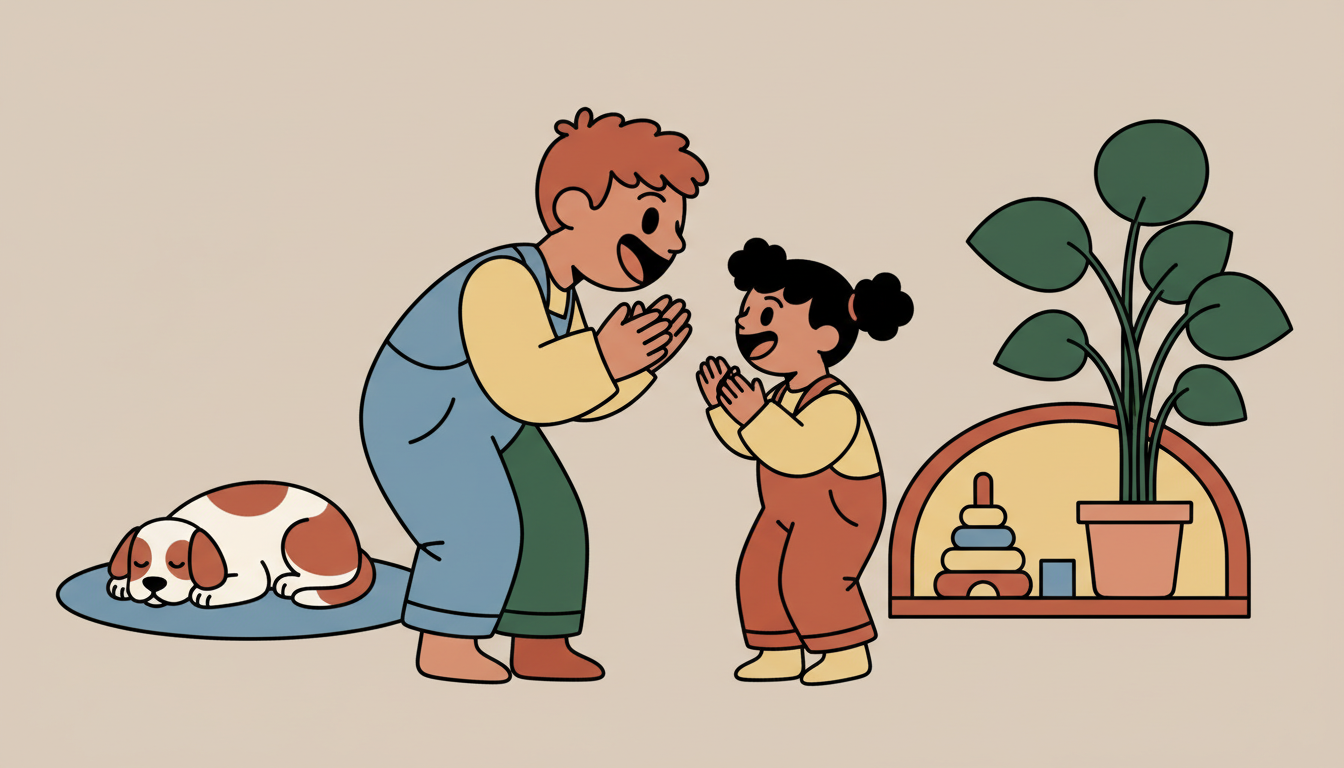
Stand facing each other and take turns being the leader. The leader shows an emotion through their facial expression and body, while the other person mirrors it exactly like a reflection. After mirroring, both share how it felt to make that expression. This physical practice helps your child connect body sensations with emotions and understand how feelings show up in the body.
Part of the Steadily developmental journey — personalized to your child.
How to Do This Activity
Stand facing each other and take turns being the leader. The leader shows an emotion through their facial expression and body, while the other person mirrors it exactly like a reflection. After mirroring, both share how it felt to make that expression. This physical practice helps your child connect body sensations with emotions and understand how feelings show up in the body.
Why It Works
Physical embodiment of emotions helps children understand that feelings have both internal and external expressions. Recognizing and responding sensitively to others' emotions is a childhood behavior that predicts stronger adult empathy and relationship quality (Eisenberg et al., 2015). This activity builds the foundation for reading body language, a critical skill for emotional intelligence and social competence.
Tips for Parents
Try emotions that involve the whole body, like excited jumping or disappointed slouching.
Ask your child what they notice happening in their body when they make different faces.
Discuss how recognizing these physical signs in others helps us understand their feelings.
Materials Needed
None
Learning Methods
Cooperative LearningMetacognitive StrategiesStructured Academic Learning

Loved this activity? Let us do the planning for you.
Steadily personalizes every activity to your child — their interests, their stage, the traits they're building — so playtime is more fun and every moment counts.
Learn how Steadily works →