Comfort during distress
6–12 monthsFamily ConnectionNo materials needed
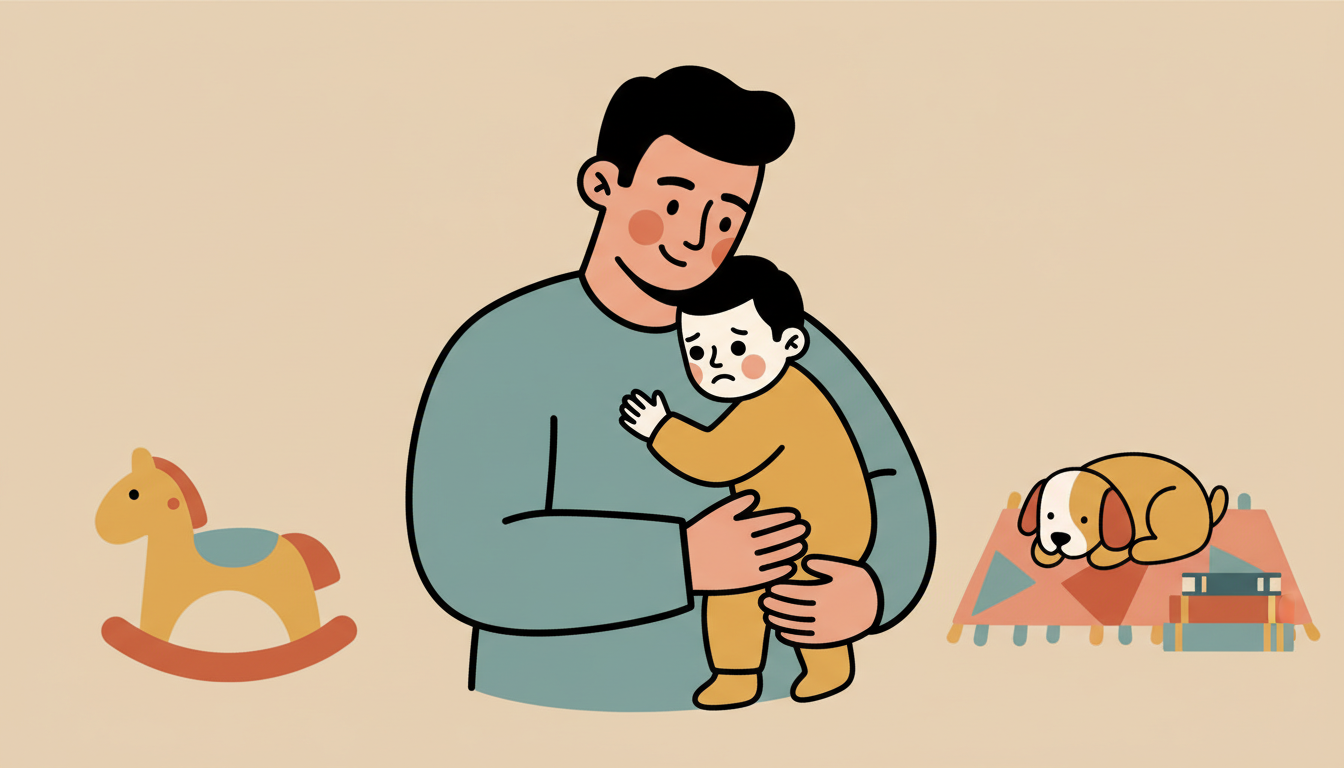
When your baby cries or fusses, respond promptly with soothing words and gentle touches. Pick them up and hold them close. Pat their back rhythmically. Your calm, warm presence helps them regulate their emotions. You're not spoiling them. You're teaching them that their feelings matter and that comfort is always available.
Part of the Steadily developmental journey — personalized to your child.
How to Do This Activity
When your baby cries or fusses, respond promptly with soothing words and gentle touches. Pick them up and hold them close. Pat their back rhythmically. Your calm, warm presence helps them regulate their emotions. You're not spoiling them. You're teaching them that their feelings matter and that comfort is always available.
Why It Works
Prompt, warm responses to distress are foundational for secure attachment. Research shows maternal responsiveness to distress predicted better negative affect regulation, empathy, and prosocial responding in children (Davidov & Grusec, 2006). During this high sensitivity period, your consistent warm responses literally shape the neural circuitry for emotional connection and trust that lasts a lifetime.
Tips for Parents
Take a calming breath before picking up your upset baby. Your calm helps them calm down too.
Use a lower, slower voice pitch when soothing. This naturally communicates safety and warmth.
Once they calm, stay close for a minute longer. This teaches them that comfort continues even after distress passes.
Materials Needed
None
Learning Methods
Responsive InteractionSensory Exploration

Loved this activity? Let us do the planning for you.
Steadily personalizes every activity to your child — their interests, their stage, the traits they're building — so playtime is more fun and every moment counts.
Learn how Steadily works →