Respect sleep and hunger rhythms
6–12 MonateFamily ConnectionKeine Materialien erforderlich
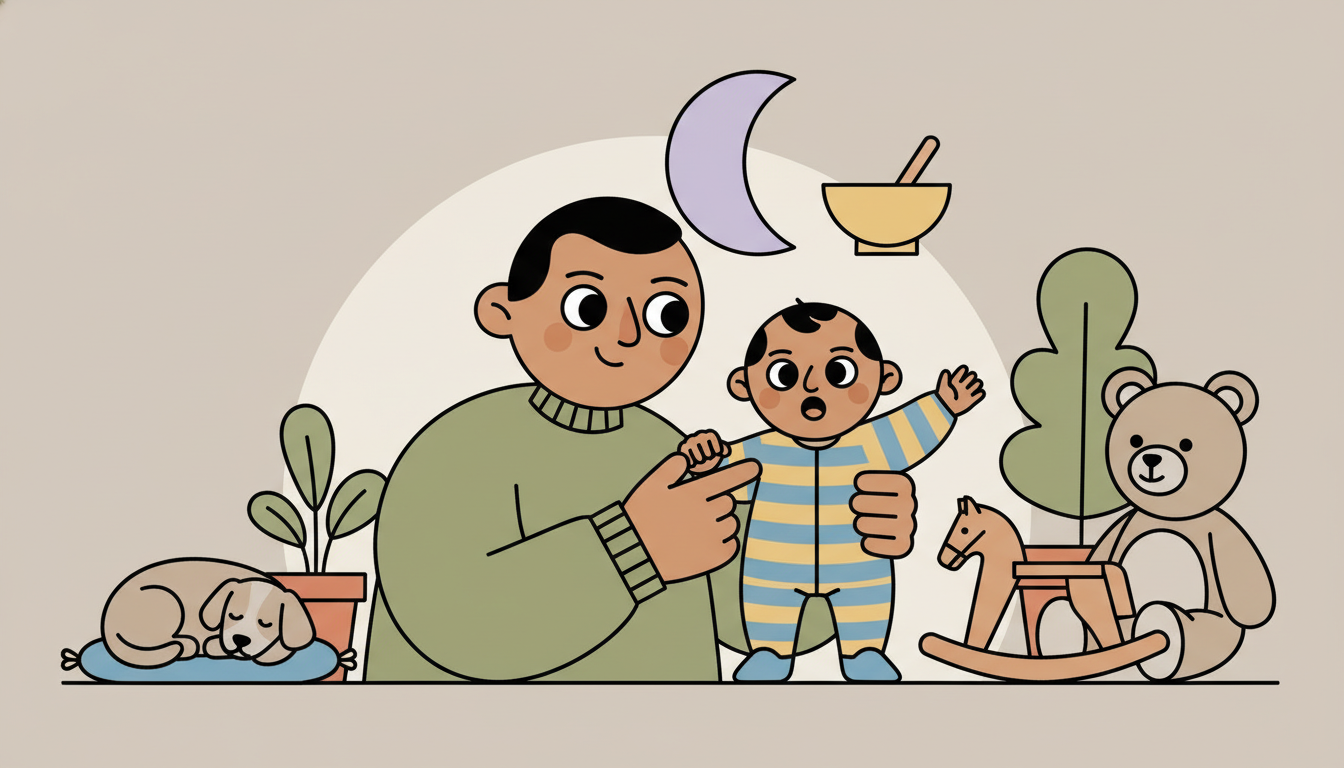
Pay attention to your child's signals about when they're tired or hungry. Offer food or nap time when they show cues, rather than by the clock alone. This shows your child that their internal signals matter. They learn to trust their own body's messages. You build a partnership rather than imposing a rigid schedule.
Teil der Steadily-Entwicklungsreise — personalisiert für dein Kind.
So geht diese Aktivität
Pay attention to your child's signals about when they're tired or hungry. Offer food or nap time when they show cues, rather than by the clock alone. This shows your child that their internal signals matter. They learn to trust their own body's messages. You build a partnership rather than imposing a rigid schedule.
Warum es funktioniert
Respecting your baby's preferences and rhythms is a foundational autonomy practice. Adults who experienced supportive encouragement of independence report 40% higher relationship satisfaction (Ryan & Deci, 2000). This responsive approach helps your child develop body awareness and self-regulation. Children with healthy independence maintain stronger family bonds while developing self-efficacy (Soenens & Vansteenkiste, 2010). You teach that their signals and preferences have value.
Tipps für Eltern
Learn your child's unique tired signs. Some rub their eyes, others get fussy or quiet.
Offer food when your child shows interest, even if it's off schedule. Responsive feeding supports autonomy.
Keep a loose routine that has flexibility. Structure helps, but rigidity can work against your child's needs.
Benötigte Materialien
None
Lernmethoden
Movement-Based LearningSensory Exploration

Hat dir diese Aktivität gefallen? Lass uns die Planung für dich übernehmen.
Steadily personalisiert jede Aktivität für dein Kind — seine Interessen, seine Entwicklungsstufe, die Eigenschaften, die es aufbaut — damit die Spielzeit mehr Spaß macht und jeder Moment zählt.
Erfahre, wie Steadily funktioniert →