Calm transition helper
6–12 moisFamily ConnectionAucun matériel nécessaire
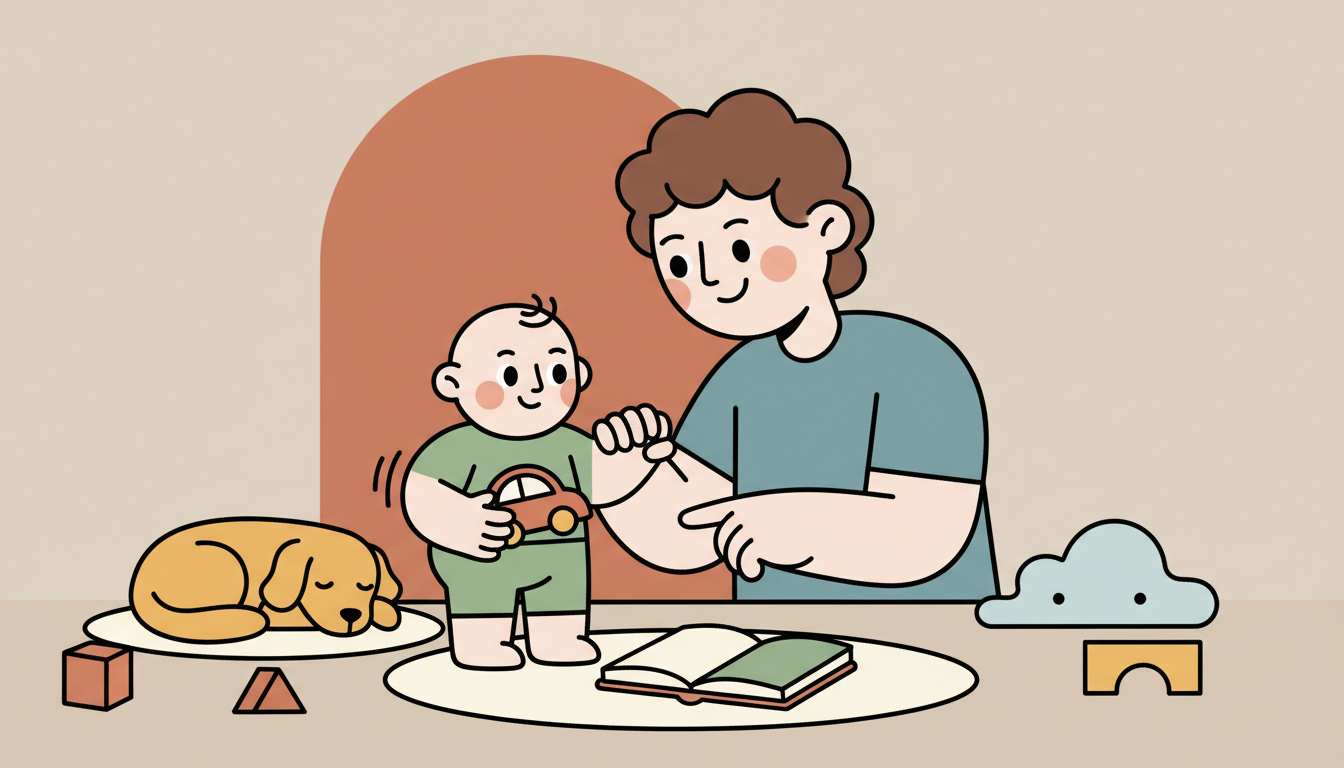
When your child resists ending playtime or changing activities, practice staying calm and using a gentle, consistent approach. Take a deep breath, speak in a soft voice, and give simple cues like showing the next activity. This teaches your child that transitions can be peaceful rather than stressful.
Fait partie du parcours de développement Steadily — personnalisé pour ton enfant.
Comment faire cette activité
When your child resists ending playtime or changing activities, practice staying calm and using a gentle, consistent approach. Take a deep breath, speak in a soft voice, and give simple cues like showing the next activity. This teaches your child that transitions can be peaceful rather than stressful.
Pourquoi ça marche
Your calm response during transitions builds the foundation for healthy conflict resolution. When you stay regulated during your child's dysregulation, you teach co-regulation skills that become internal capacities later. Research shows that collaborative problem-solving approaches in families predict better parent-child relationships during adolescence and young adulthood (Robin & Foster, 1989). These early co-regulation experiences lay the groundwork for those future skills.
Conseils pour les parents
Take three slow breaths before responding to resistance. This helps you stay regulated.
Use the same phrase each time, like "Time to change" with a gentle tone.
Stay close and offer comfort if your child becomes upset during the transition.
Matériel nécessaire
None
Méthodes d'apprentissage
Responsive Interaction

Tu as aimé cette activité ? Laisse-nous planifier pour toi.
Steadily personnalise chaque activité pour ton enfant — ses centres d'intérêt, son stade de développement, les traits qu'il développe — pour que le jeu soit plus amusant et que chaque instant compte.
Découvre comment fonctionne Steadily →