Name what baby feels
6–12 mesiFamily ConnectionNessun materiale necessario
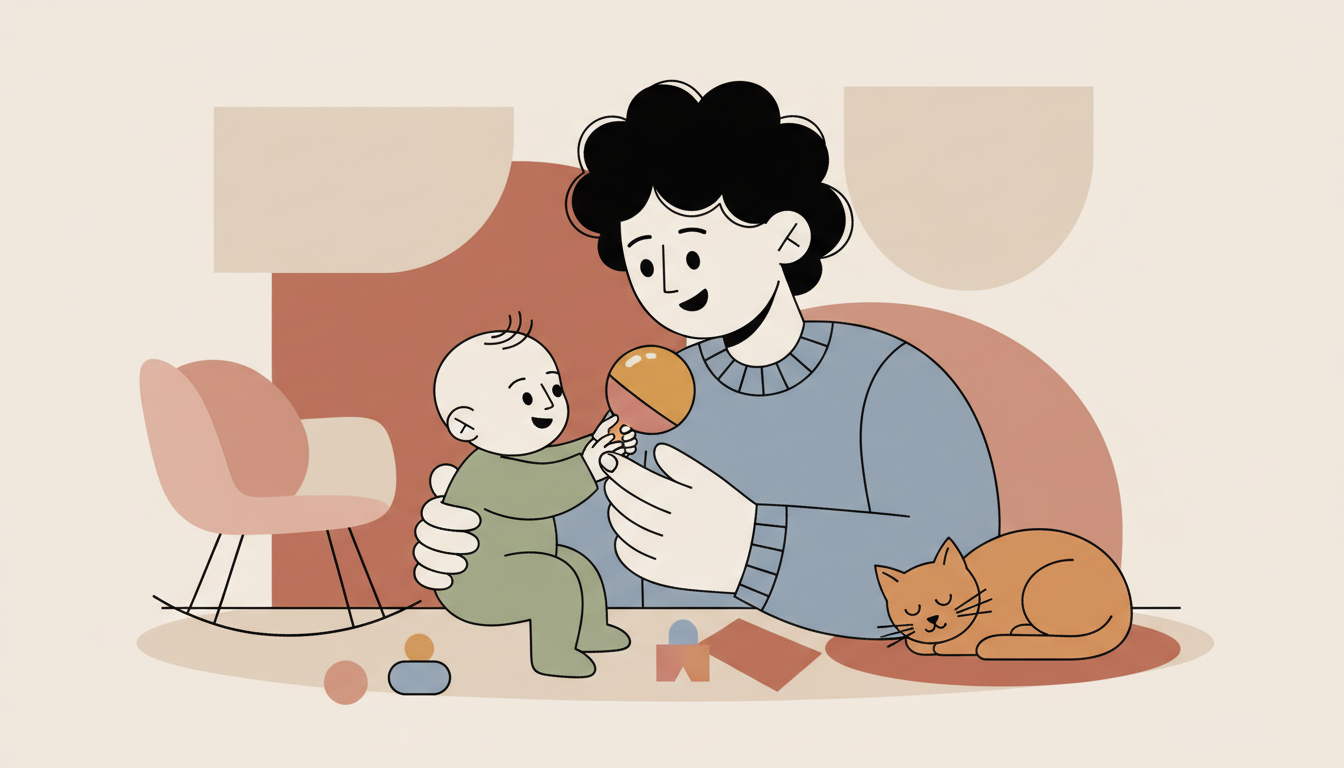
As you interact with your baby, put words to what they might be feeling. When they reach for a toy, you might say, "You're excited about that rattle." When they cry, try "You feel frustrated right now." You're not expecting them to understand the words yet, but you're showing them that feelings can be recognized and shared. This builds the foundation for emotional intelligence.
Parte del percorso di sviluppo Steadily — personalizzato per il tuo bambino.
Come svolgere questa attività
As you interact with your baby, put words to what they might be feeling. When they reach for a toy, you might say, "You're excited about that rattle." When they cry, try "You feel frustrated right now." You're not expecting them to understand the words yet, but you're showing them that feelings can be recognized and shared. This builds the foundation for emotional intelligence.
Perché funziona
Labeling emotions helps babies begin to understand their internal experiences. When parents show empathy by naming feelings, they demonstrate care and compassion consistently, which is how empathy emerges in children (Hoffman, 2000). Research confirms that recognizing and responding sensitively to emotions in early childhood predicts stronger empathy development later (Eisenberg et al., 2015).
Consigli per i genitori
Use a calm, warm voice even when naming difficult feelings like frustration or sadness.
Keep it simple with one feeling word at a time.
This practice helps you tune into your baby's emotional world too.
Materiali necessari
None
Metodi di apprendimento
Responsive InteractionSensory Exploration

Ti è piaciuta questa attività? Lascia che siamo noi a pianificare per te.
Steadily personalizza ogni attività per il tuo bambino — i suoi interessi, la sua fase di crescita, i tratti che sta sviluppando — così il momento del gioco è più divertente e ogni istante conta.
Scopri come funziona Steadily →