Mirror emotion practice
0~6개월Emotional Wellbeing준비물: Mirror
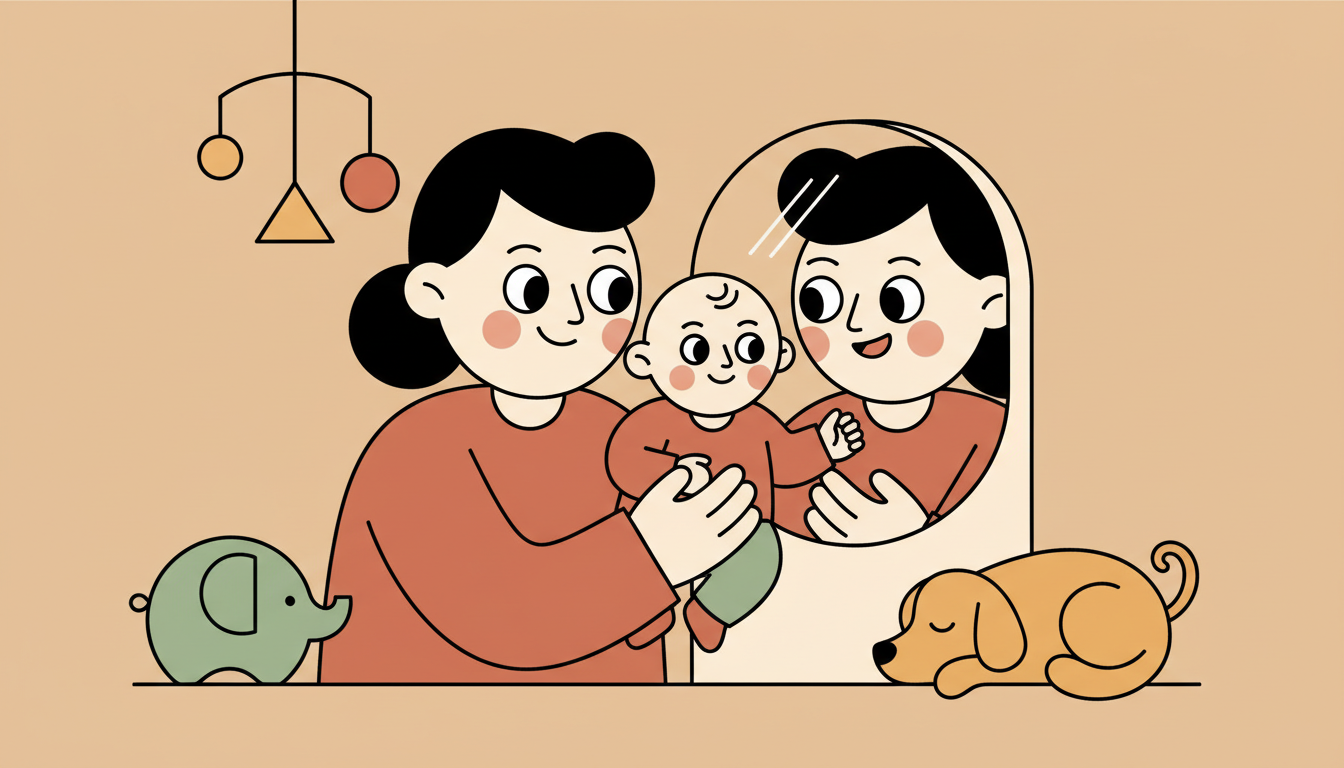
Hold your child in front of a mirror during a calm moment. Make gentle facial expressions and wait for them to respond. Try a smile, then a surprised face, then back to calm. This helps them see emotions change and return to baseline. Name the emotions simply like happy or surprised. This early emotion recognition supports their developing ability to understand and regulate feelings.
우리 아이에게 맞춤 설계된 Steadily 발달 여정의 일부예요.
활동 방법
Hold your child in front of a mirror during a calm moment. Make gentle facial expressions and wait for them to respond. Try a smile, then a surprised face, then back to calm. This helps them see emotions change and return to baseline. Name the emotions simply like happy or surprised. This early emotion recognition supports their developing ability to understand and regulate feelings.
효과가 있는 이유
Recognizing and experiencing different emotions in a safe context builds emotional regulation skills. When children see emotions change and resolve, they begin to understand that feelings are temporary and manageable. This supports the development of resilience through emotional awareness and regulation. Research demonstrates that children with higher emotional resilience show significantly better outcomes, with early emotional regulation predicting later adaptive functioning (Liew et al., 2008). The responsive interaction and emotion modeling during this activity create neural pathways for understanding and managing emotional states.
부모를 위한 팁
Keep expressions gentle and changes slow. Big dramatic faces may startle young infants.
Watch their reaction. If they seem uncertain, return to smiling right away.
Do this when they are content, not when they are upset or tired.
필요한 준비물
Mirror
학습 방식
Responsive InteractionMovement-Based Learning

이번 활동이 마음에 들었어? 계획은 우리가 대신 세워줄게.
Steadily는 아이의 관심사, 발달 단계, 그리고 기르고 있는 특성에 맞춰 모든 활동을 개인화해줘. 덕분에 놀이 시간이 더 즐거워지고 모든 순간이 더욱 가치 있어지지.
Steadily 작동 방식 알아보기 →