Emotion naming practice
6–12 maandenFamily ConnectionGeen materialen nodig
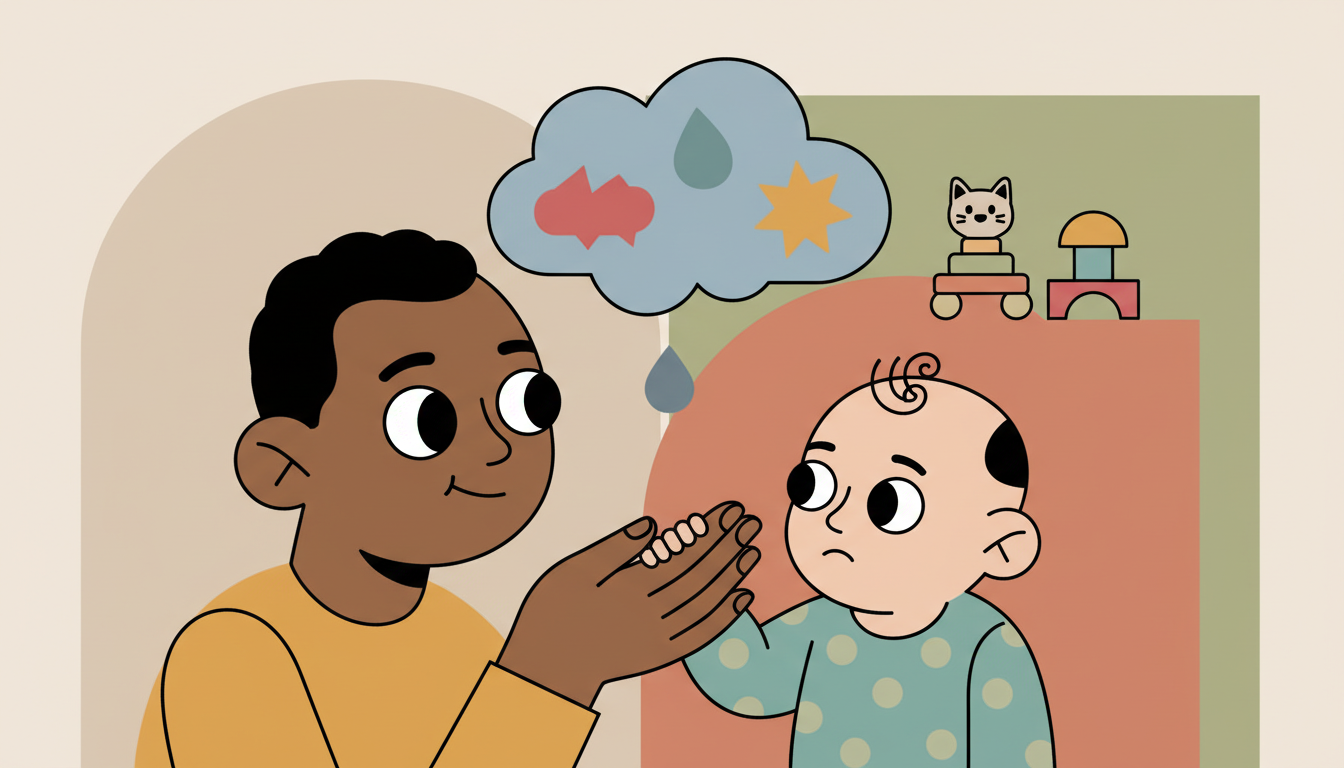
When your child shows distress, name what you see in simple words. Say "You feel upset" or "That was frustrating" in a calm voice. This validates their experience and teaches that emotions are normal and manageable. Your calm naming helps them begin to understand their own feelings.
Onderdeel van de Steadily ontwikkelingsreis — gepersonaliseerd voor jouw kind.
Hoe doe je deze activiteit
When your child shows distress, name what you see in simple words. Say "You feel upset" or "That was frustrating" in a calm voice. This validates their experience and teaches that emotions are normal and manageable. Your calm naming helps them begin to understand their own feelings.
Waarom het werkt
Naming emotions calmly teaches that feelings are normal and can be discussed peacefully. This builds the foundation for verbal conflict resolution. Early training in conflict resolution and problem-solving skills leads to significantly better peer relationships and reduced aggression, with children showing 25% fewer behavioral problems (Webster-Stratton & Reid, 2004). Your calm emotion coaching now prepares your child to use words for conflict resolution as they grow.
Tips voor ouders
Use simple emotion words like upset, sad, mad, or frustrated consistently.
Keep your voice calm and accepting when naming emotions. Avoid sounding worried or stressed.
Pair emotion naming with soothing so your child learns feelings can be managed.
Benodigde materialen
None
Leermethoden
Responsive Interaction

Vond je deze activiteit leuk? Laat ons de planning voor je doen.
Steadily personaliseert elke activiteit voor jouw kind — hun interesses, hun fase, de eigenschappen die ze ontwikkelen — zodat speeltijd leuker is en elk moment telt.
Ontdek hoe Steadily werkt →