Emotion naming practice
6–12 mesesFamily ConnectionNenhum material necessário
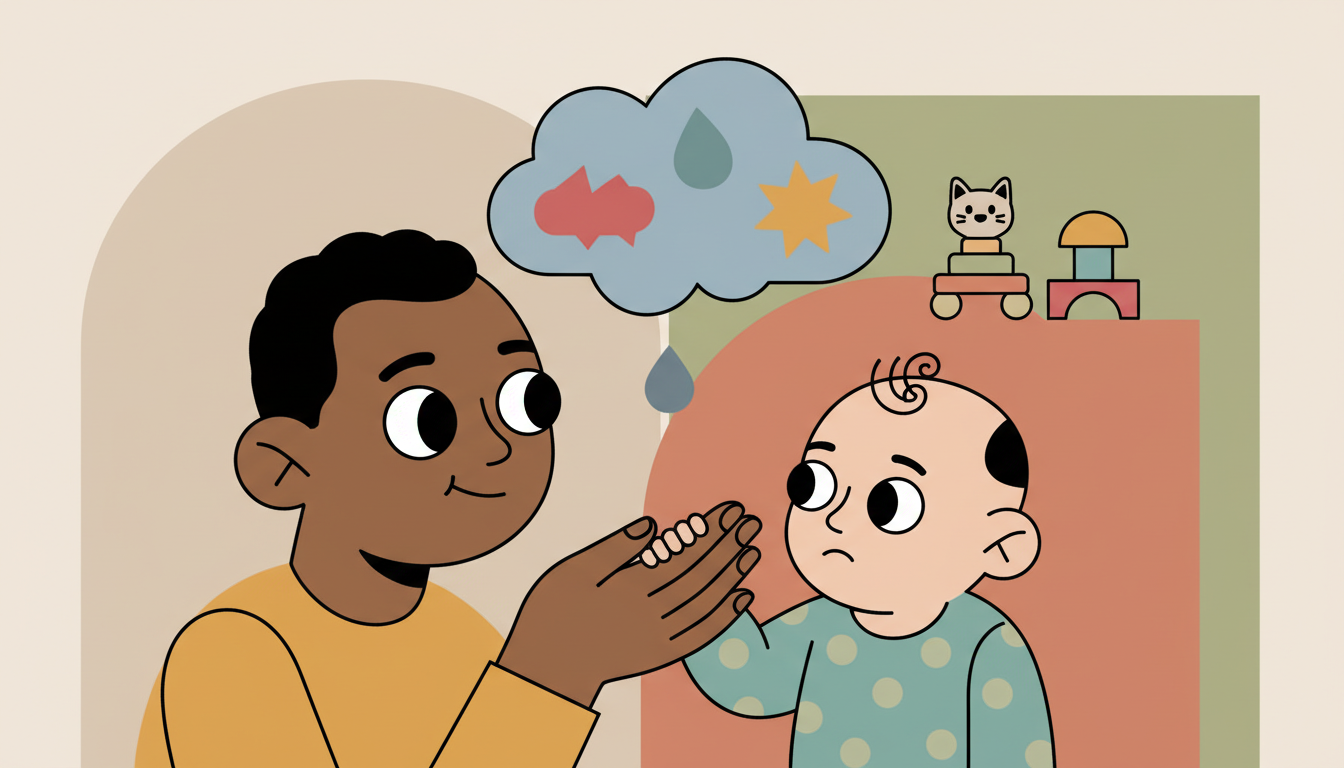
When your child shows distress, name what you see in simple words. Say "You feel upset" or "That was frustrating" in a calm voice. This validates their experience and teaches that emotions are normal and manageable. Your calm naming helps them begin to understand their own feelings.
Parte da jornada de desenvolvimento da Steadily — personalizada para o seu filho.
Como fazer esta atividade
When your child shows distress, name what you see in simple words. Say "You feel upset" or "That was frustrating" in a calm voice. This validates their experience and teaches that emotions are normal and manageable. Your calm naming helps them begin to understand their own feelings.
Por que funciona
Naming emotions calmly teaches that feelings are normal and can be discussed peacefully. This builds the foundation for verbal conflict resolution. Early training in conflict resolution and problem-solving skills leads to significantly better peer relationships and reduced aggression, with children showing 25% fewer behavioral problems (Webster-Stratton & Reid, 2004). Your calm emotion coaching now prepares your child to use words for conflict resolution as they grow.
Dicas para os pais
Use simple emotion words like upset, sad, mad, or frustrated consistently.
Keep your voice calm and accepting when naming emotions. Avoid sounding worried or stressed.
Pair emotion naming with soothing so your child learns feelings can be managed.
Materiais necessários
None
Métodos de aprendizagem
Responsive Interaction

Adoraste esta atividade? Deixa o planeamento por nossa conta.
Steadily personaliza cada atividade para o teu filho — os seus interesses, a sua fase e os traços que está a desenvolver — para que a hora de brincar seja mais divertida e cada momento conte.
Descobre como funciona a Steadily →