Voice tone feelings
6–12 maandenEmotional WellbeingGeen materialen nodig
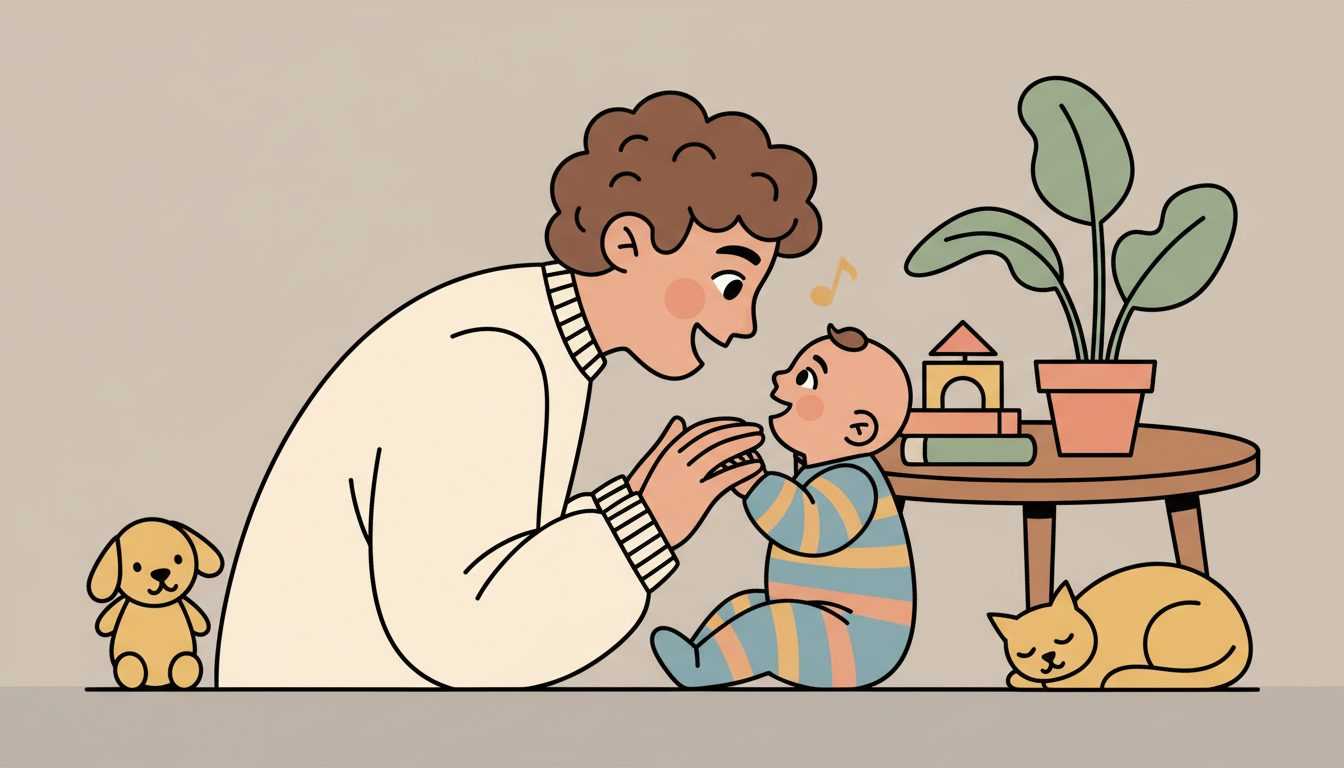
Use different tones of voice while talking to your child and notice their response. Try a calm, slow voice. Try a playful, higher voice. Try a warm, gentle voice. Your child will start to recognize what different tones communicate.
Onderdeel van de Steadily ontwikkelingsreis — gepersonaliseerd voor jouw kind.
Hoe doe je deze activiteit
Use different tones of voice while talking to your child and notice their response. Try a calm, slow voice. Try a playful, higher voice. Try a warm, gentle voice. Your child will start to recognize what different tones communicate.
Your tone of voice is an emotion all by itself. It teaches your child how to recognize feelings just by listening.
Waarom het werkt
Responsive interaction through vocal communication helps infants learn to recognize and respond to different emotional cues. Caregivers who vary their tone of voice teach children that emotions are expressed in multiple ways and help build emotional awareness. This sensory exploration of emotional communication, combined with responsive interaction, builds the emotional recognition skills that form the foundation of emotional intelligence (Goleman, 1995).
Tips voor ouders
Exaggerate your tones a bit so your child can clearly hear the difference. This helps them learn to recognize emotional nuance.
Watch your child's response. Do they smile at playful tones? Do they settle with calm tones? Your child will guide you toward what works for them.
Benodigde materialen
None
Leermethoden
Responsive InteractionSensory Exploration

Vond je deze activiteit leuk? Laat ons de planning voor je doen.
Steadily personaliseert elke activiteit voor jouw kind — hun interesses, hun fase, de eigenschappen die ze ontwikkelen — zodat speeltijd leuker is en elk moment telt.
Ontdek hoe Steadily werkt →